
The first week of June was slipping away, I hadn't been arsed to go out and explore, however the thought of being glued to the TV watching the Jubilee shizzle... well relish the thought!
We did have have a plan that involved some 150m rope, which in the end turned out to be a big bag of fail, literally (and not for the first time either) :(
PLAN B.
I was actually just debating going home via the local cornershop and stocking up on some 1664's - *Hold that thought.
It just so happened on the way back our attention was diverted to an age old watercourse that TLR and myself had discussed on many an occasion, but had somehow managed to elude us..
In the end the irony of the naming of this place given that on this day it was the Queens Diamond Jubilee.
Borne of the fact it passes under one of a few remaining cotton mills left standing in the area that just so happens now shares the same name.
_____________________
First up we headed over to Strinesdale (near Waterhead) where we followed the watercourse from it's source.
The original reservoirs were built in 1828, and much later in 1991 were drained and replaced by two smaller lakes.
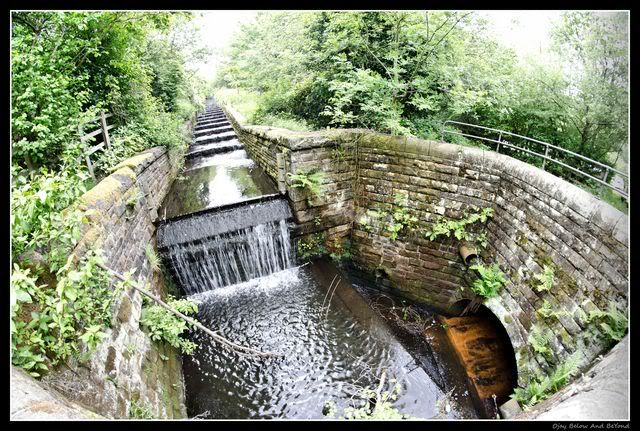
Known to locals as 'The Golden Steps' this is where it really starts to get interesting as it infalls at the first culverted section.
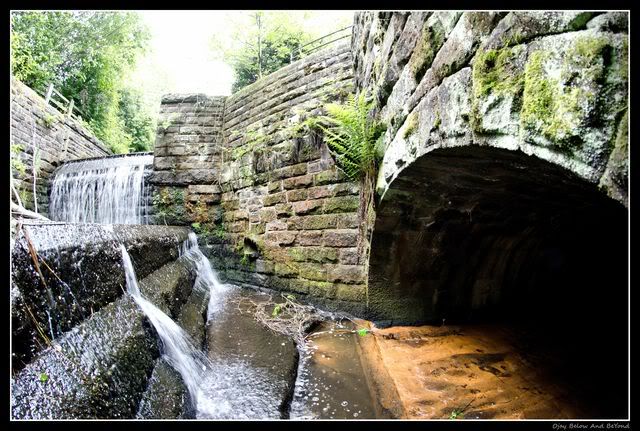
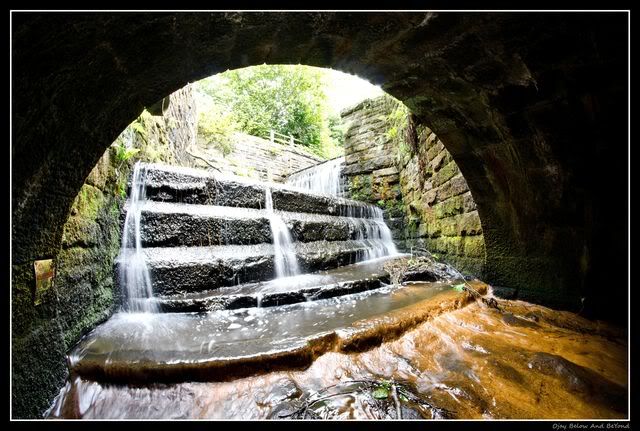
Once inside,
A sizeable dressed Stone Arch ahead of the cascades carries the water downstream
Heading downstream, a 7ft stone tunnel
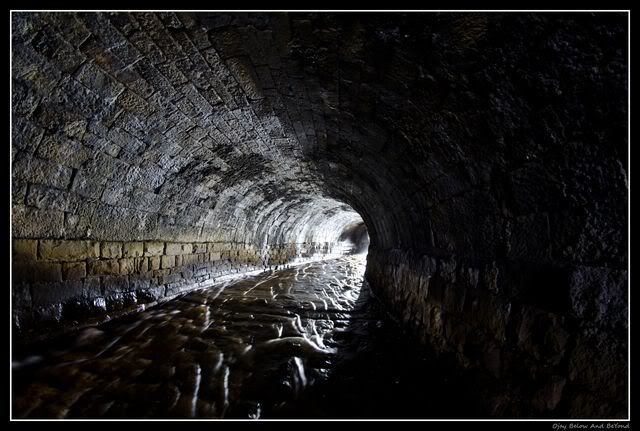
This culverted section is approx 350m in Length and also passes under the local Waterworks.
(Infact it's at this point there is larger 8ft Arch section, which also houses an overflow from the works above)
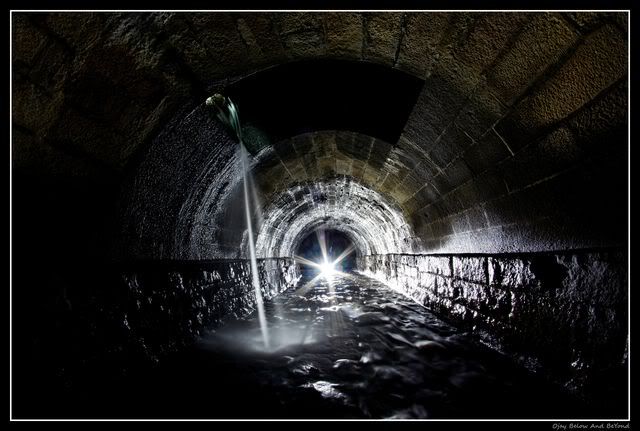
Further downstream, another watercourse enters on the right.
HORSHOE
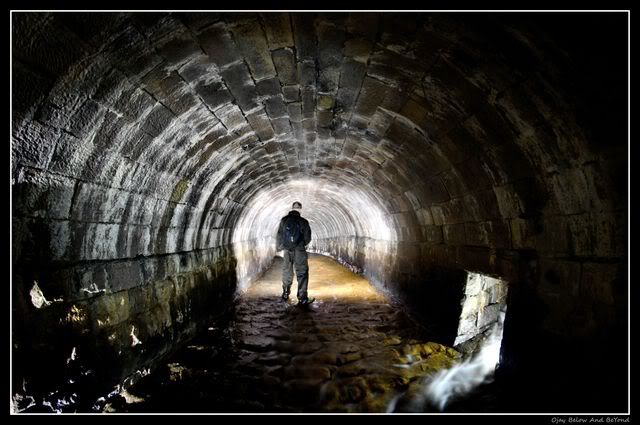
The stone tunnel eventually shrinks back to just over 6ft.
Before connecting with this 5ft Re-lined brick tunnel, which is a later addition to the drain.
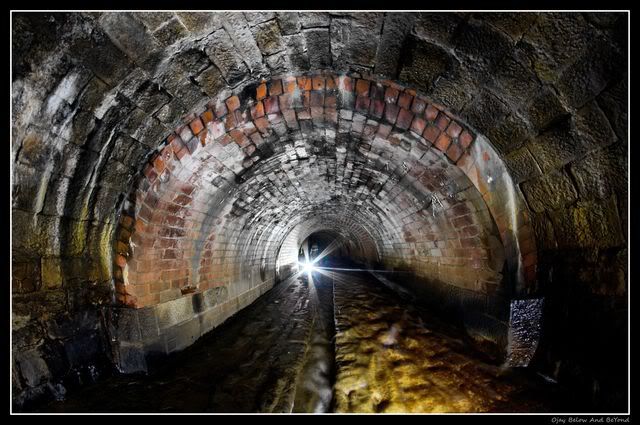
'Dicking about'
(Here the brook passes through a 1ft channel, within a cobble-stone floor)
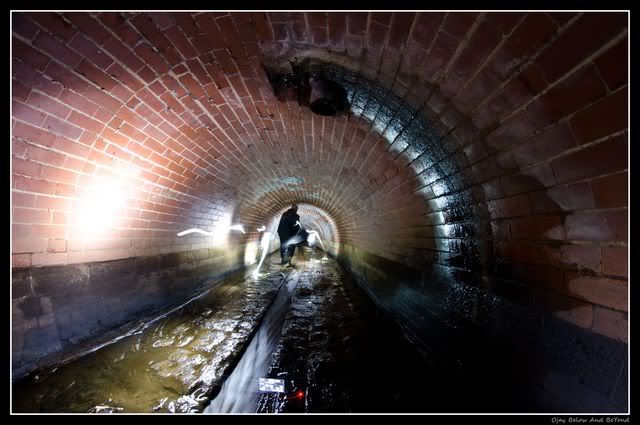
Further downstream,
It begins to shrink to around 4ft, as well as been silted up in waist deep water
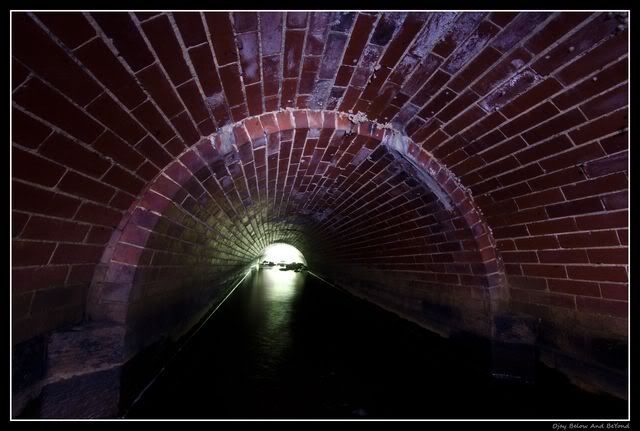
Back/Ankle breaking, there was finally light at the end of the tunnel - Thank f00k!
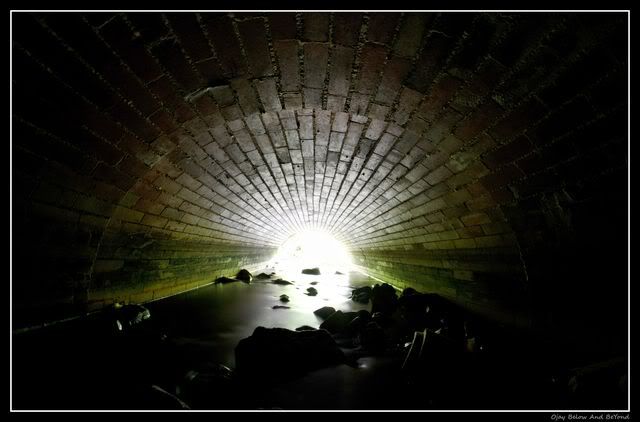
Outfall
*(I did say hold that thought earlier)
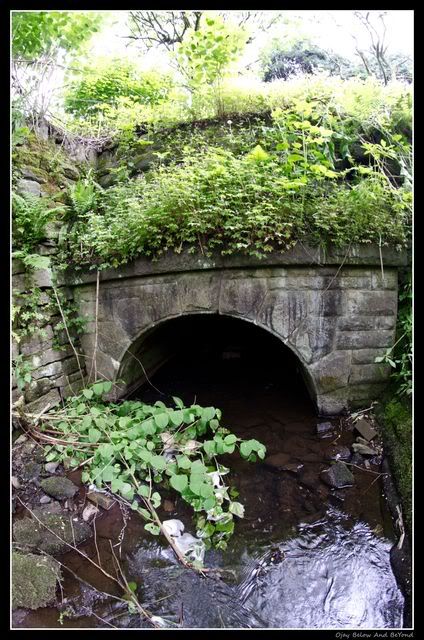
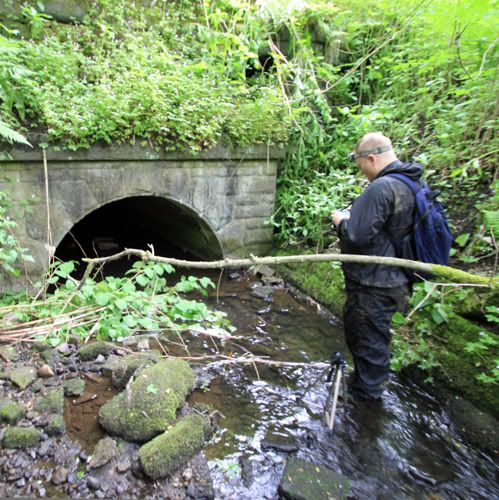
Well after taking one look at this st00p fest you would forgive me for thinking head straight to the nearest off licence and f00k off home!
(Pic by TLR)
...Following the brook downstream, the next section passes through Waterhead, an area which in 1927 suffered badly at the hands of the 'Great Flood of Oldham'.
(The flood struck Oldham on July 11 causing major damage across the area)
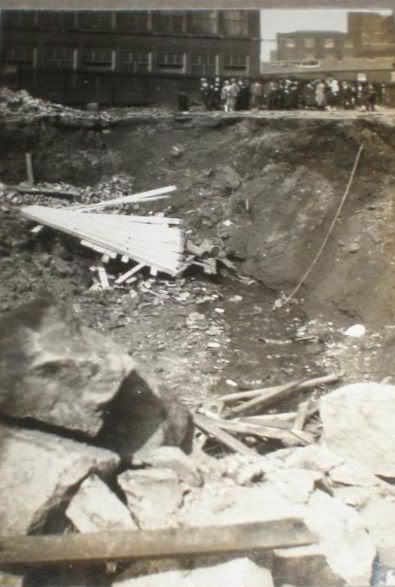
A few hundred yards down,
And the culvert passes underneath the now demolished Orb Mill
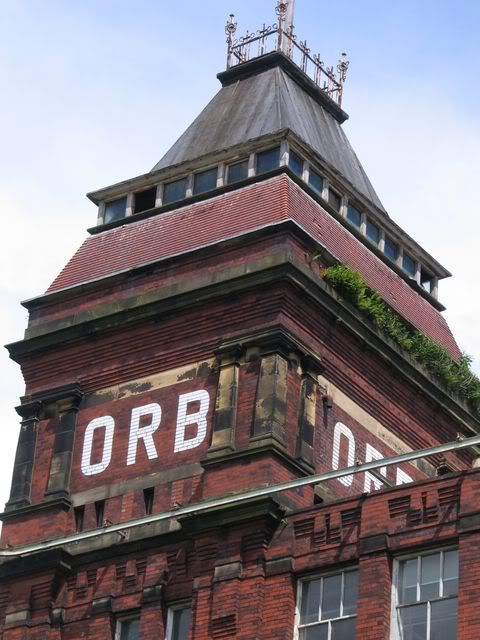
Architect P.S. Stott, Spindleage (1915)
Engine: Buckley & Taylor, 1800 hp.
Engine: Buckley & Taylor, 1800 hp.
Built in 1907 and extended in 1941, the former textile mill ceased production in 1961 and was taken over by I.C.I. Ltd for the manufacture of wallpaper until 1976.
It was then sold to Hestair Hope, the educational suppliers
(I'm sure the old timers on here like me will remember them)..
The mill was finally demolished in 2004
(Pic c/o Dominic Franklin)
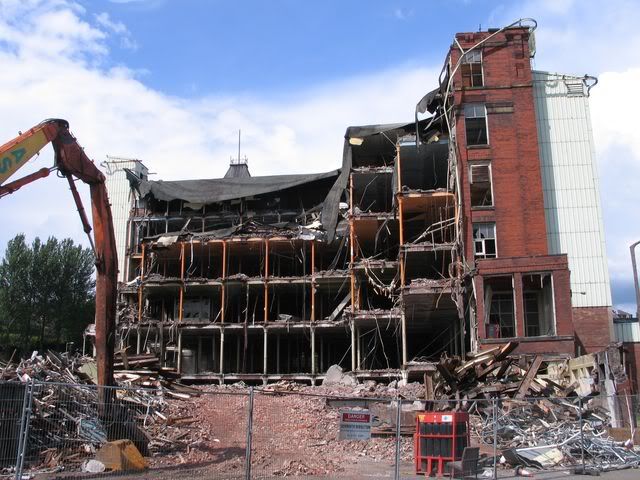
Wait for it...
To make way for the Waterhead academy, which will replace Breeze Hill and Counthill schools!
(Still Hestair Hope had the last laugh)
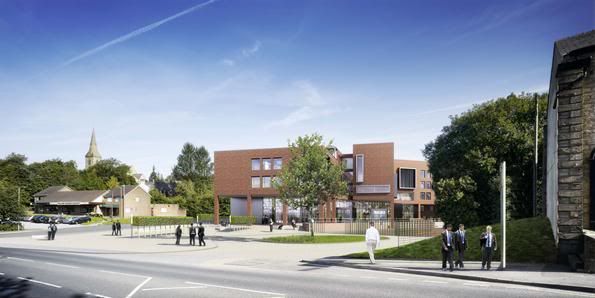
L-P Archaeology, advisers to Channel 4’s “Time Team” programme won the tender to carry out the survey ahead of the planning for the new academy.
It was here that the archaeologists uncovered evidence of the 1927 flood, when the culvert which runs beneath burst it's banks and part of the mill and local cottages collapsed whilst carrying out excavations at the former Orb Mill site.
Their five-day dig opened a series of 30-metre trenches over the Orb and neighbouring Newroyd mill sites, the Sunday School building associated with the local Methodist Chapel, and the site of the Paulden Wood Colliery.
Blair Poole, one of the archaeologists, excavated the watercourse where the River Medlock was diverted to power the Newroyd Mill, which was built in the 1820s, and demolished in 1970.
He said: “We found four or five bricks in part of the stone wall at a funny angle, where buildings have basically been damaged and taken with the flood".
His colleague, Claire Statter, said: "Although most of the site was cleared when the mill was demolished, sections were very well preserved".
She also added:
We excavated the rear wall relating to the Sunday School, however it had also been disturbed during demolition.
Orb Mill revealed the most interesting areas of archaeology.
We saw the foundations for the main frontage of the mill building, and a very well preserved brick floor which would have been within the mill itself.
This floor later had concrete pads inserted into it to act as a base for large machinery.
To the rear of the site we also found a brick structure which is thought to be part of the engine house or at least the power system for the mill.
On the north-east corner of the site we found a large stone wall which would have formed the southern side of a large water course, seen on the 1892 map.
Evidence for the colliery was restricted to a dumped deposit of waste associated with the mining that took place on the site in the 18th to late 19th century.
HERE
The pics from the former Orb Mill site/section of culvert, around 400.
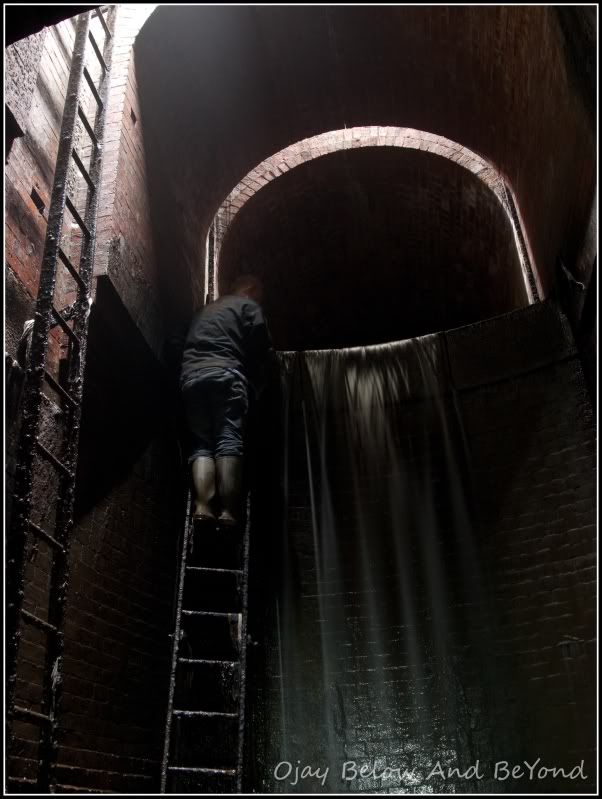
Infall
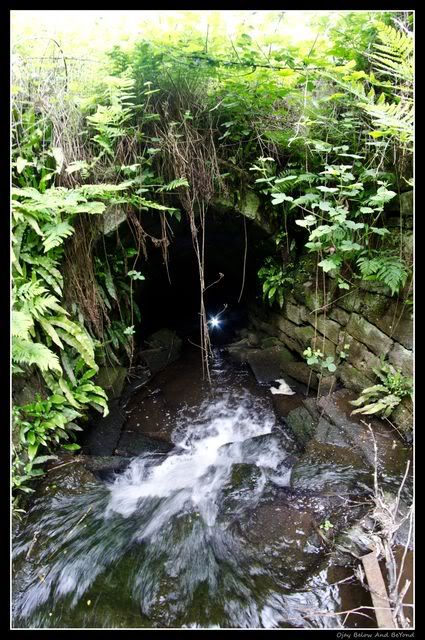
Looking back up the weir,
Which inverts the brook around 2m to the tunnel below an ancient Stone Arch
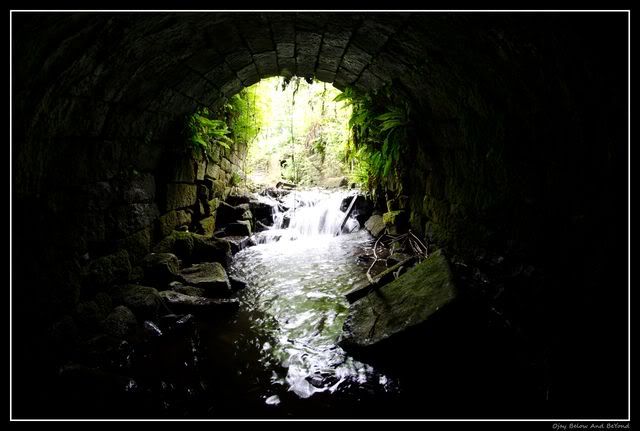
Joining with a 5ft Stone Horshoe as we followed it downstream
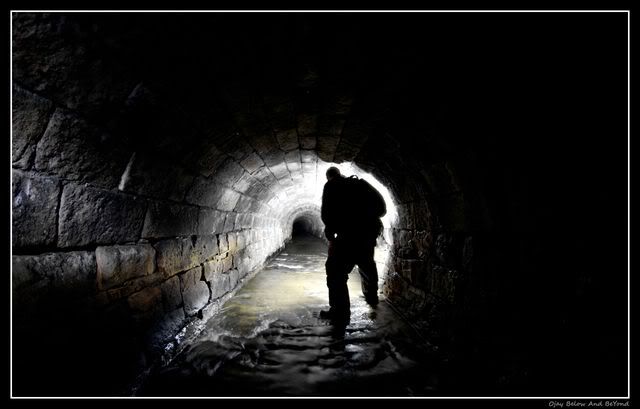
The next section was even stoopier (at just under 5ft),
And appeared much older as it passed under the former Orb Mill
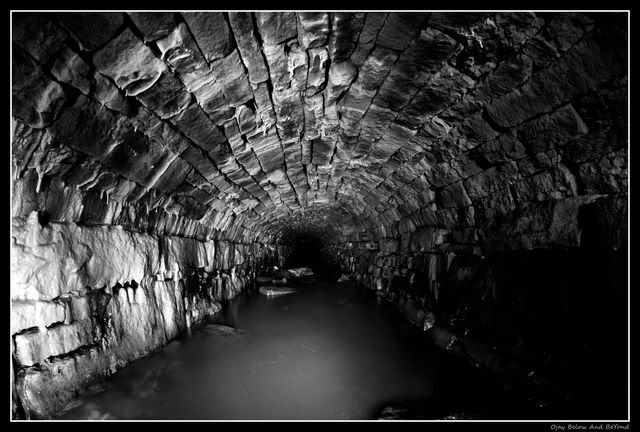
Eventually the tunnel opened up to a sizeable Stone Arch again as it continued on past the old mill
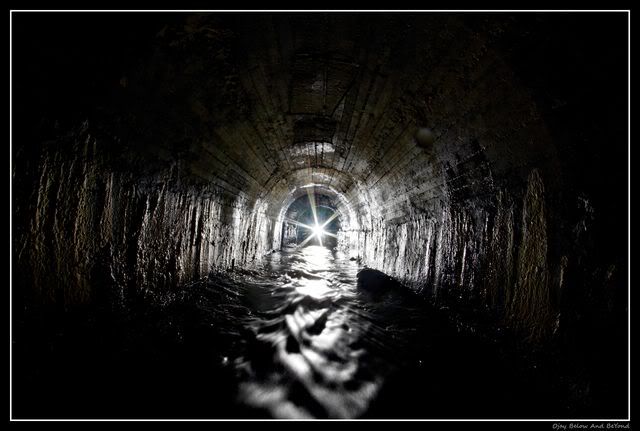
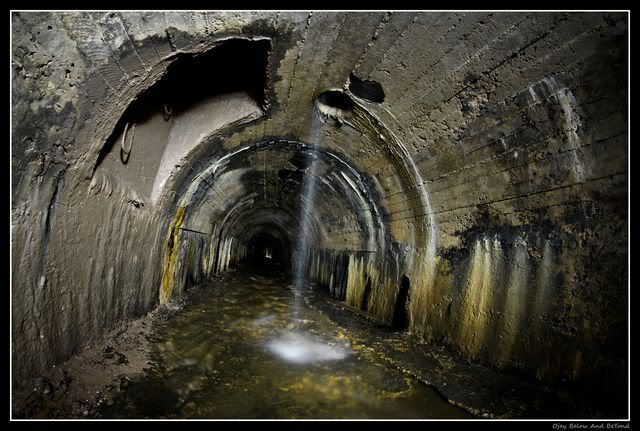
Now this next piece, which was the last stretch at around 400 yards before it hit the outfall was my favourite..
>6ft Stone Arch to >12ft Brick/Stone Round Pipe, YES PLEASE!
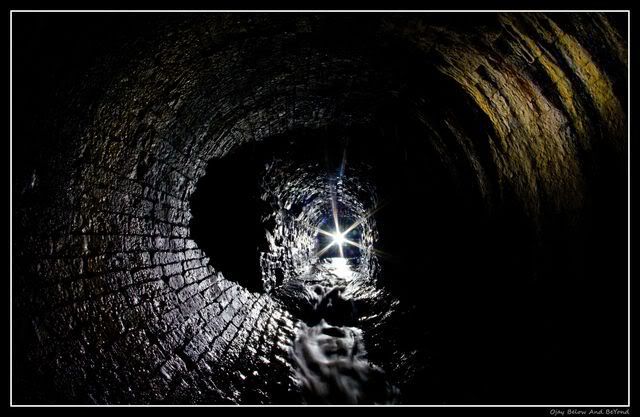
After about 100 yards, it shrinks back down to just over 6ft, here the TLR models a Stone Outfall
(Note the tide mark)
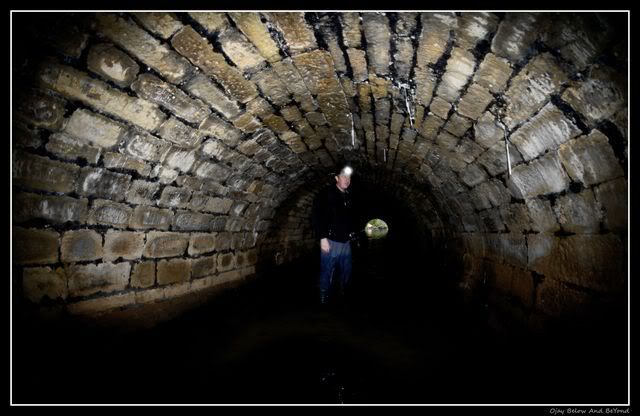
Lastly this is where it becomes all Majestic...
Majestic Mill
(Pic Props to Tarboat)
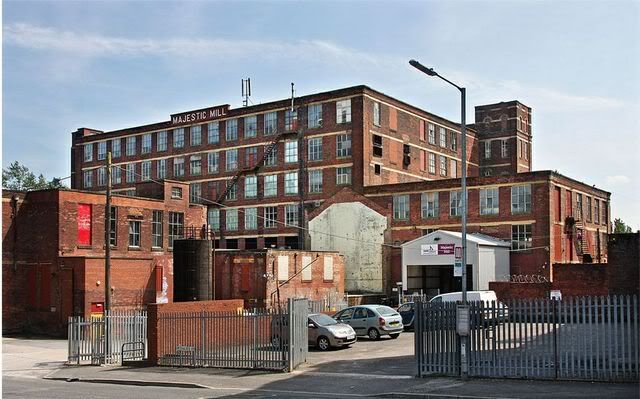
Architect F.W. Dixon, Spindleage (1915)
Engine: J.W. McNaught, 1600 hp.
Engine: J.W. McNaught, 1600 hp.
Built in 1903, on the site of the former 'Lower Mill'.
After the Second World War it was taken over by the Lancashire Cotton Corporation.
In 1964, it was purchased by Courtaulds Ltd and converted to ring spinning 1971.
Falling a casualty of a trade recession, premises finally closed in 1982, with the loss off 200 jobs.
It was later purchased by a textile factors for use as a warehouse until 1990, today it now has multiple occupation.
___________________
....Back to business as the last culverted section heads down from Waterhead towards Lees Village and underneath the former Majestic cotton mill.
Infall
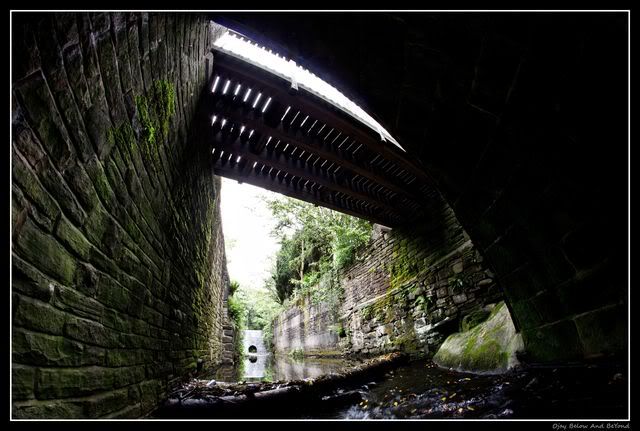
Manhole shaft deep below Huddersfield Rd
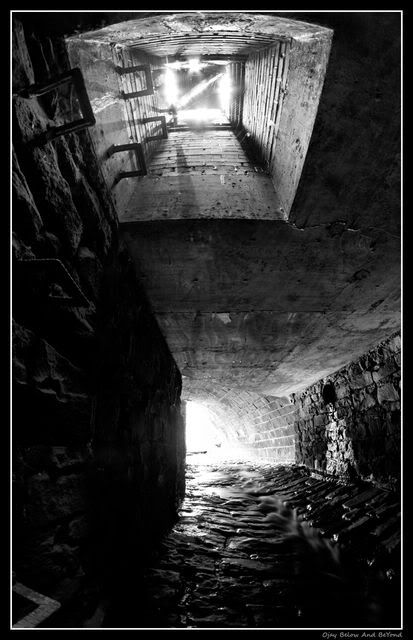
No drain is complete without the smell of fresh and a fanny plaster or two!
(Thats right, I got a whiff of fresh the minute we stepped near this place) - TLR was confused :D
HERE, the tunnel on the left is actually an age old CSO
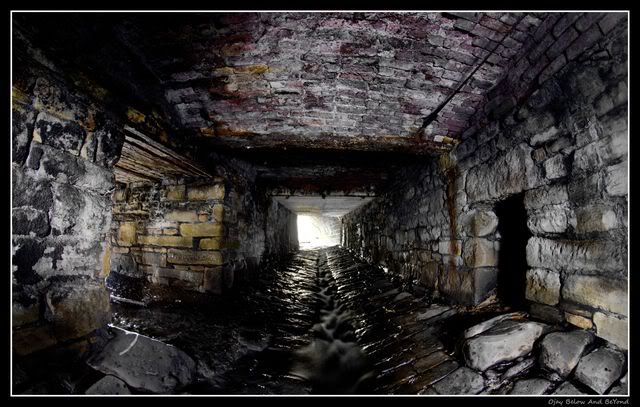
Turdtastic
My nostrils were twitching like f00k as I decided it was a good idea to crawl up a 3ft stone CSO
(Later on I left TLR stranded in here to play lighting bitch)
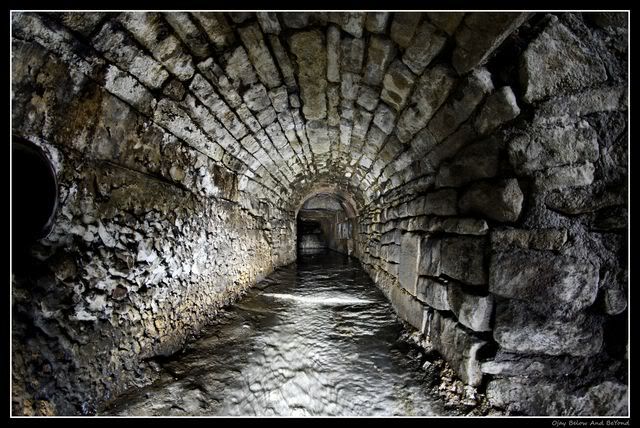
Whilst TLR chased some crispy duck about, I was busy admiring the masonry and sniffing shit as we made our way down to the outfall.
The final transition from >Stone >Brick was spectacular
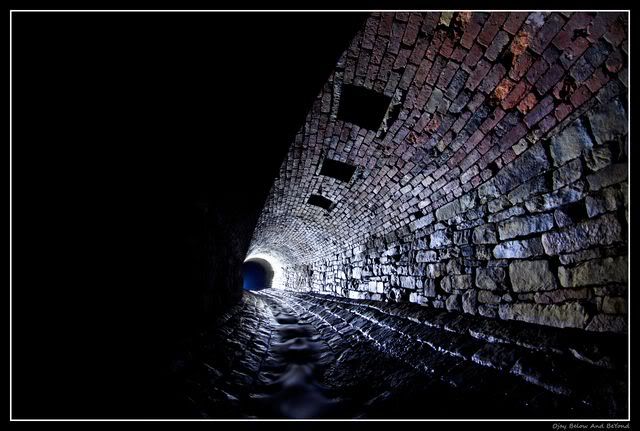
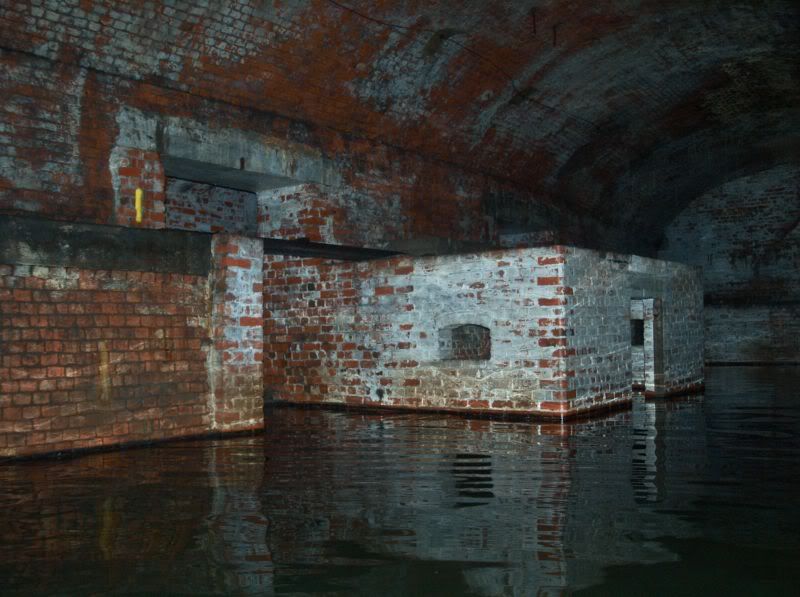
As far as drain clusterfucks go THIS IS IT > A right mashup
(Brick/Stone/Iron/Concrete)
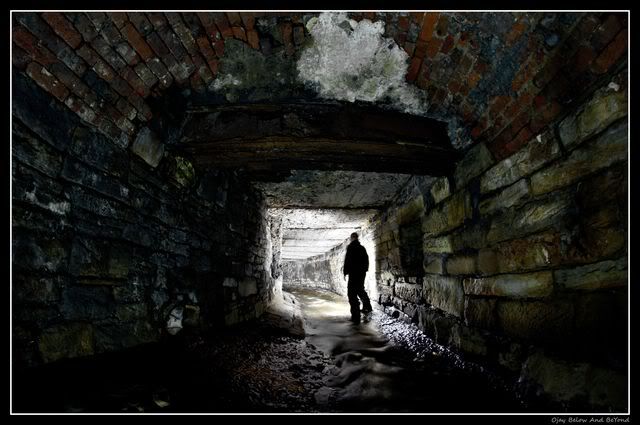
Outta_Fall_Da_Here
Despite the tranquility, it was deep silt & st00py as shit
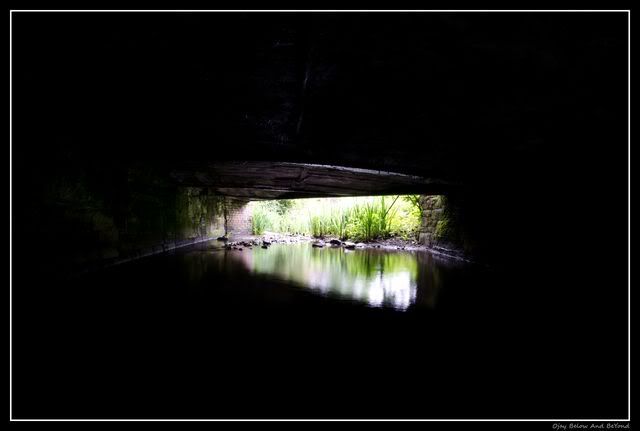
PEACE.







0 comments:
Post a Comment
Note: only a member of this blog may post a comment.