

I've wanted see this for a good while now, inspired by SL who achieved this a good few years ago now it was most certainly something I wanted to have a crack at before packing in this whole UE shizzle..
After less than 5 hours sleep in 3 days and enough walking/climbing to last a lifetime I decided we should have a look at this.
The 'paint job' is now finished so climbing is the only option as the scaffold has now gone.
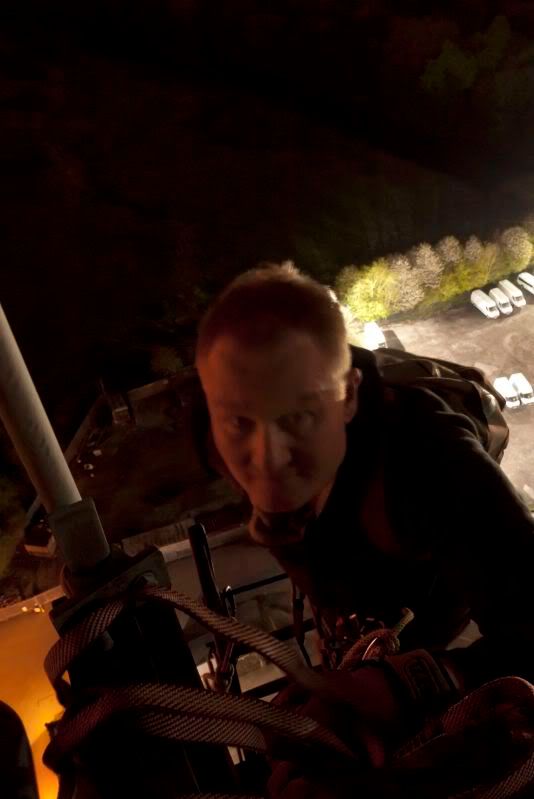
I set about climbing up to the top whilst the others had a much deserved rest and watched on, but quickly had to abort as my foot was giving me real jip and the pain was immense.
An executive decision was made to GTFD with a view to re-visiting another time, as having no safety whatsoever was far to selfish an act to push onto the others conscience.
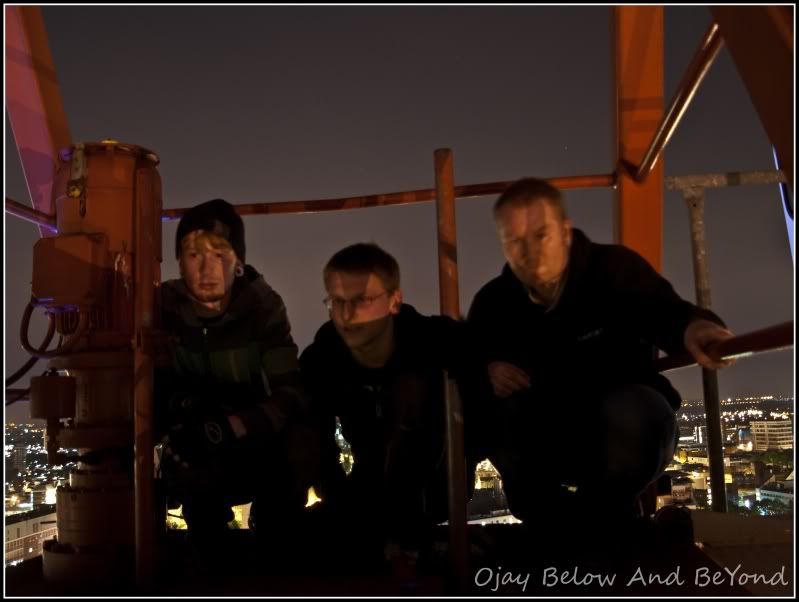
The others were knackered and didn't share my enthusiasm, but total respect all the same for coming this far up and mooching about some live rail.
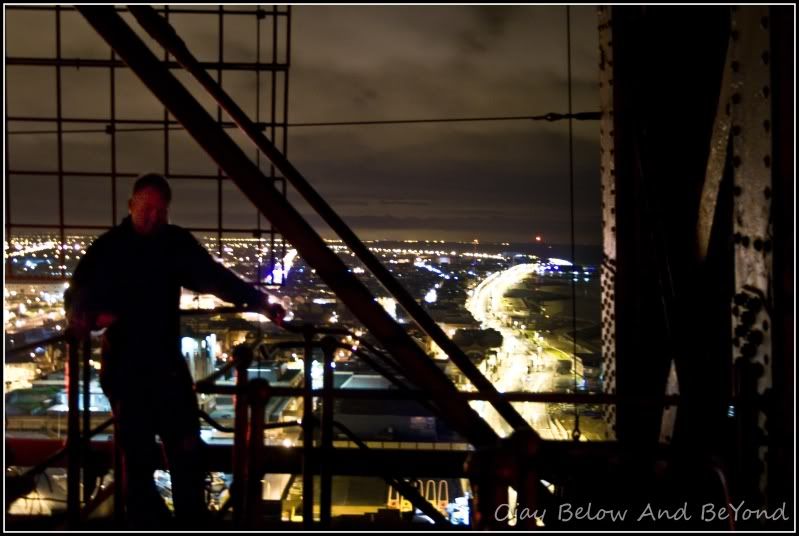
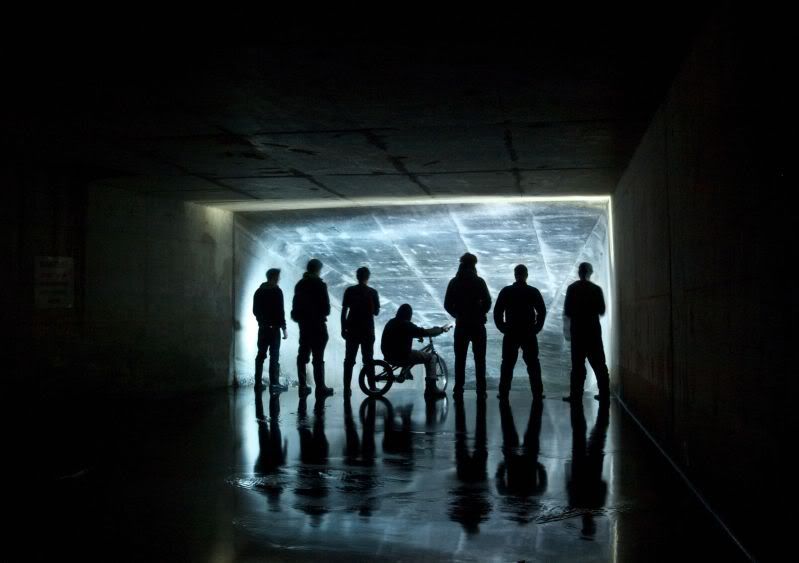
As the trains passed by I decided I would grab a few shots before heading off and even despite cutting this one short I was more than happy I had finally made it up there ;)
Some Shizzle:
The bridge connects Scotland's capital city, Edinburgh, with Fife and is the longest cantilever bridge in the world spanning the River Forth at a length of 2,528.7 metres (8,296 ft)
It was the first major structure in Britain to be constructed entirely of steel between 1883 & 1890
The bridge is, even today, regarded as an engineering marvel
At is 2.5 kilometres (1.6 mi) in length, the double track is elevated 46 metres (151 ft) above high tide
It consists of two main spans of 521.3 metres (1,710 ft), two side spans of 207.3 metres (680 ft), and 15 approach spans of 51.2 metres (168ft)
Each main span comprises two 207.3 metres (680 ft) cantilever arms supporting a central 106.7 metres (350 ft) span truss
The three great four-tower cantilever structures are 100.6 metres (330 ft) tall, each 21 metres (70 ft) diameter foot resting on a separate foundation
The southern group of foundations had to be constructed as caissons under compressed air, to a depth of 27 metres (90 ft)
At its peak, approximately 4,600 workers were employed in its construction. Initially, it was recorded that 57 lives were lost; however, after extensive research by local historians, the figure was increased to 98
A recent repainting of the bridge commenced with a contract award in 2002, for a schedule of work which was expected to continue until March 2009.
The work was completed on 9th December 2011, involving the application of 230,000 m2 of paint at a total cost of £130M.
This new coat of paint is expected to have a life of at least 25 years, and perhaps as long as 40, thus removing the need for constant repainting.
Pict0rs...


As I stood mid-rail for the last shot, you can see the train approaching behind

I'll be back...








0 comments:
Post a Comment
Note: only a member of this blog may post a comment.